
In 2023, Planting Fields Foundation is proud to have presented the work of artist Courtney M. Leonard (b. Shinnecock, 1980) through BREACH: Logbook 23 | ROOT at Planting Fields.
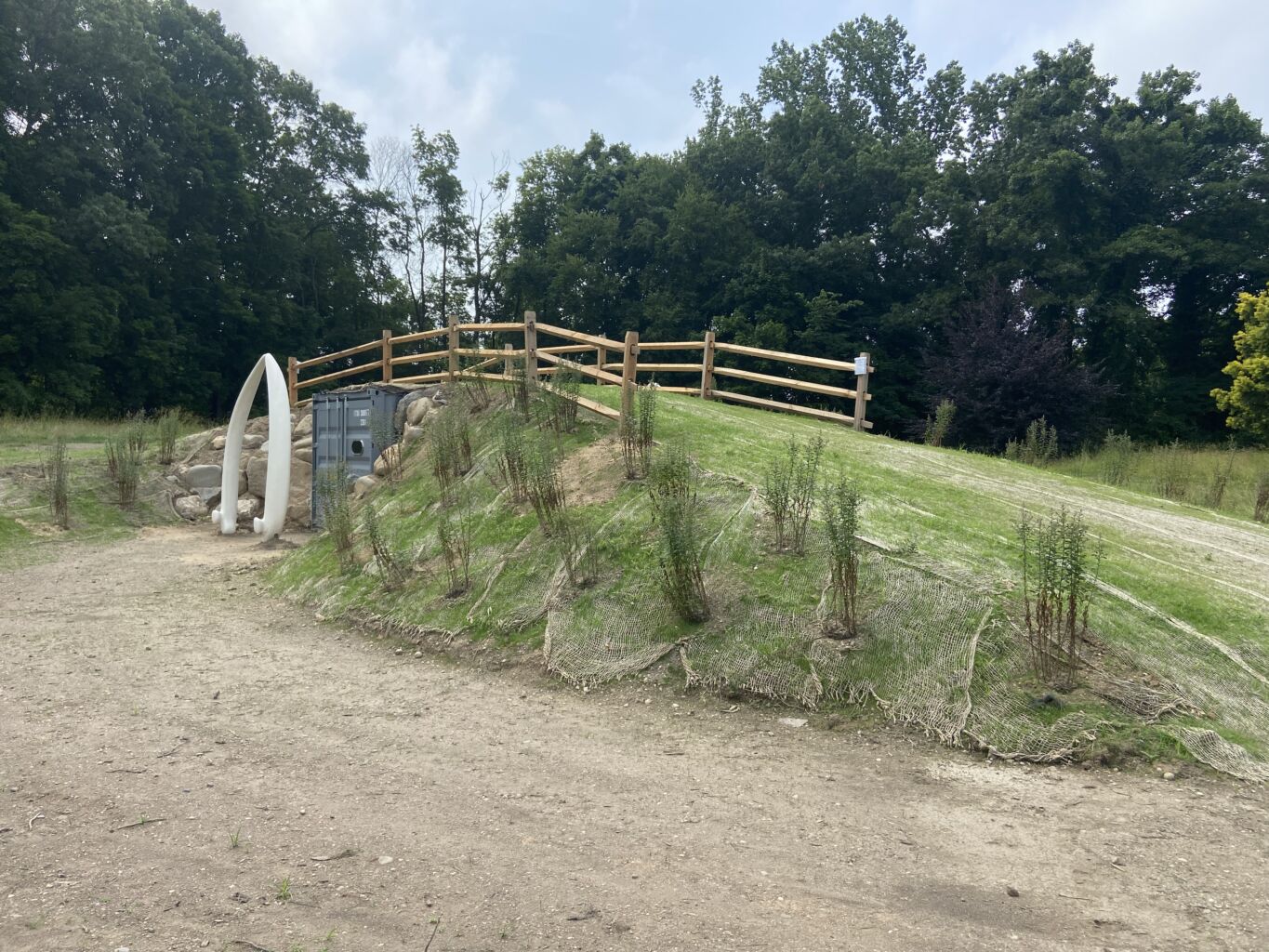
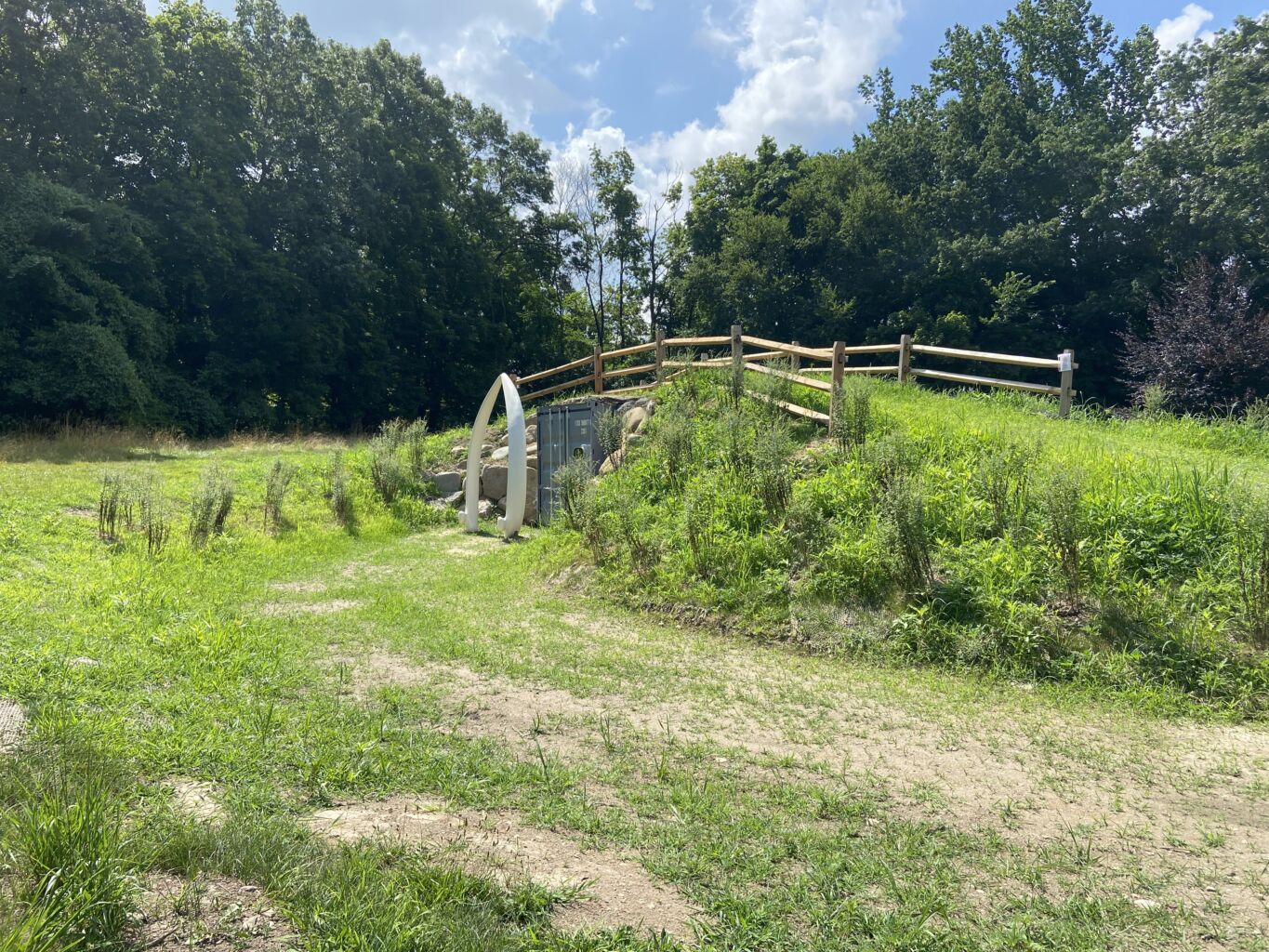
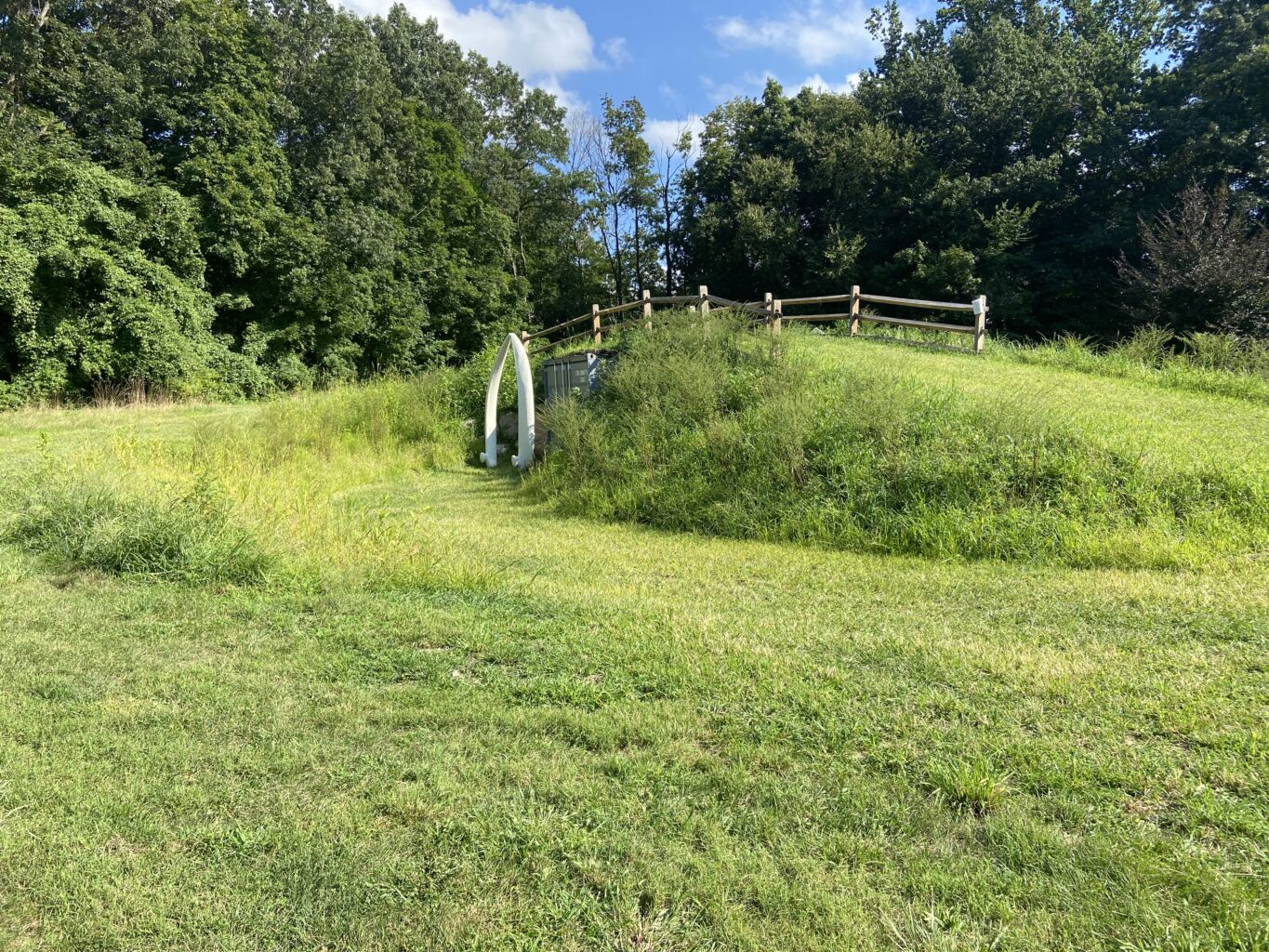
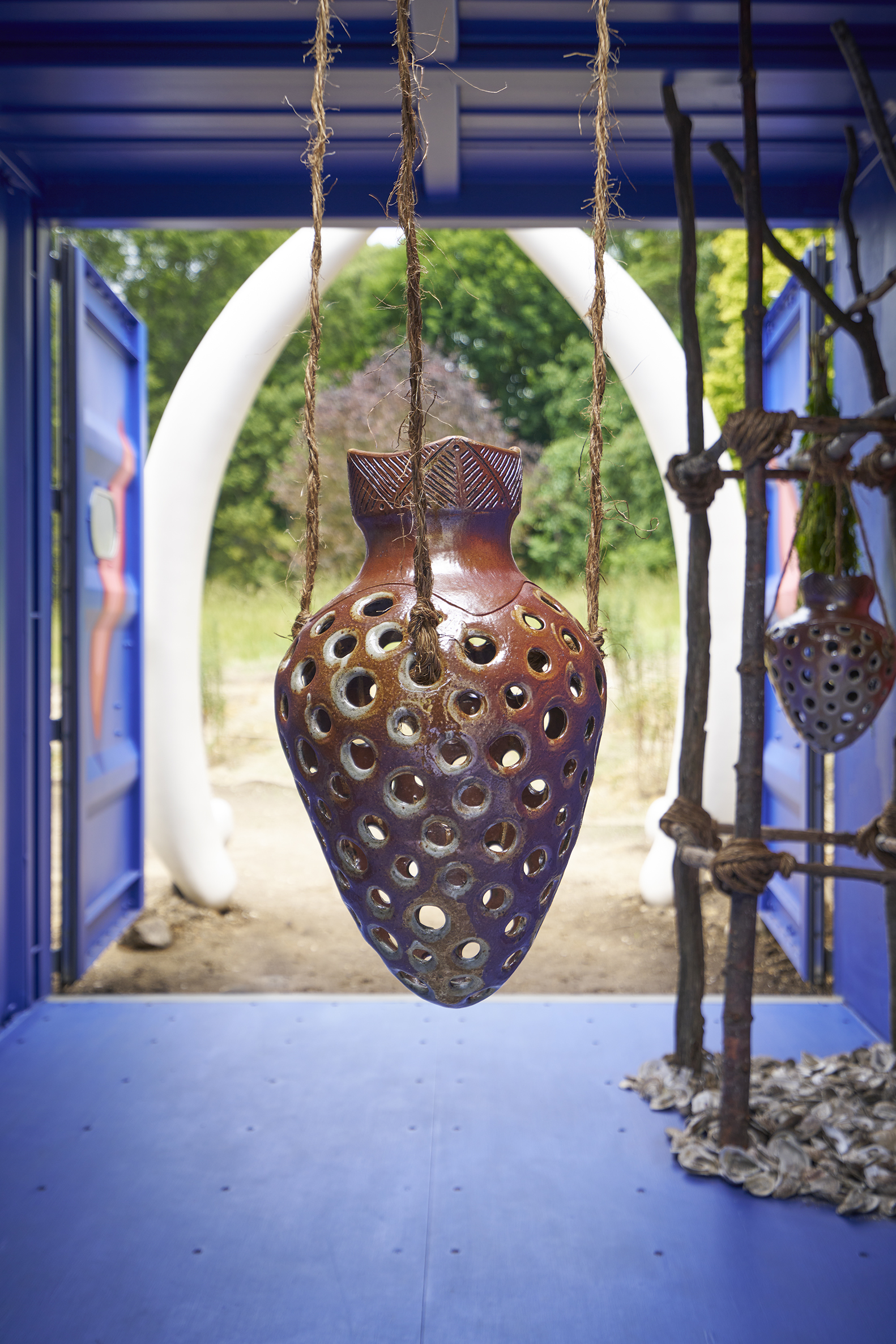
BREACH: Logbook 23 | ROOT was a site-specific installation that addressed how the colonization of Long Island has impacted the culture of coastal Indigenous groups, particularly the Shinnecock Nation. ROOT featured two primary design themes: whales and root cellars. The shape of the shipping container structure evoked the body of a whale; visitors entered through the jaws of a Northern Right Whale and moved through its interior. Through these motifs, ROOT explored themes of food and cultural sovereignty, as well as ongoing ecological issues that endanger the Shinnecock Nation and global waterways.
At the intersection of food, cultural sovereignty, and ecological concern lies the ongoing struggle of Indigenous communities to continue their traditional foodways, including the subsistence hunting of whales. By using a shipping container as the body of her installation, Leonard called attention to the disproportionate regulation placed on Indigenous groups rather than on international shipping companies when it comes to the wellbeing of endangered and vulnerable whale populations. Each year, thousands of whales are struck in international shipping lanes, and in the year preceding the exhibition, the bodies of more than two dozen whales washed ashore along the East Coast, including at Lido Beach and Robert Moses State Park on Long Island.
Whales have long been central to Leonard’s work and are especially relevant to the history of Planting Fields. Mai Rogers Coe’s maternal grandfather, Captain Peleg W. Gifford, was a whaling ship captain out of Fairhaven, Massachusetts—the second-largest whaling port in the United States at the time. Before her family made their fortune through Standard Oil, their wealth had been rooted in the lucrative whale oil industry. Commercial whaling decimated whale populations in the late nineteenth century, and international shipping continues to threaten them today.
Food sovereignty is defined as the right of peoples to healthy and culturally appropriate food produced through ecologically sound and sustainable methods. Historically and into the present day, Indigenous peoples’ access to traditional foodways, including the use of root cellars for food storage, has been challenged. When cattle belonging to colonizers fell through the ceilings of the cellars, Indigenous communities were obligated to compensate for the injuries, sometimes through the transfer of land. The elliptical opening in the roof of the structure tied together the themes of root cellars and whales: it referenced both the way cattle fell into the cellars and the shape of a whale’s body, or a pod of whales, when viewed from above.
By bringing a shipping container to Planting Fields, Leonard deliberately disrupted the landscape, an act that spoke to how the Shinnecock way of life has been—and continues to be—disrupted by land development and the environmentally unsustainable use of waterways. The installation ultimately asked visitors to consider their collective responsibility within the global ecosystem and to build connections with one another as stewards of a shared home.
About the Artist and the BREACH Series:
Courtney M. Leonard (Shinnecock, b.1980) is an artist and filmmaker. Her current work embodies the multiple definitions of “breach”, an exploration and documentation of historical ties to water, whales, and material sustainability. In legal contexts, the word “breach” also means violation and infringement, as when other local and national governments impose policies that disregard sovereign Indigenous nations. Taking a ship’s log as a model, Leonard presents her artwork in installations and in series that act as visual “logbooks” recording the journey of BREACH.