
The Coes had homes in South Carolina, Wyoming, and of course here in Oyster Bay. They also had a slew of residences in New York City. W.R. and Mai settled on 6 East 83rd Street circa 1903 where they were steps away from Frederick Law Olmsted’s Central Park and Calvert Vaux’s original Metropolitan Museum of Art.
6 East 83rd Street
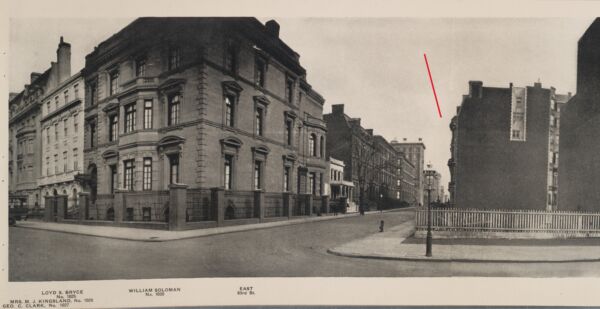
Photo of 83rd Street from 1911, the Coe’s townhouse was likely on the south side of the street. Image courtesy of the Irma and Paul Milstein Division of United States History, Local History and Genealogy, The New York Public Library Digital Collections.
Unfortunately, there is no photographic documentation of the townhouse. However, the archives paint a picture of what the rooms may have looked like. In August 1912, Mai wrote about her wallpaper choice for a redesign of the den to A. Lowenbein’s Sons (furniture, upholstery, and decorations), “the paper we are thinking for the den is stunning and I think the room will be charming with it. The design is this, a black background with pagodas in gilt with a touch of red.” W.R. added that the carpet in the den should be dyed “jet black”, all woodwork-stained black and a “fairly gold dull ceiling” should top off the room. This Chinoiserie den is a fine example of Mai’s taste for Asian influenced design.
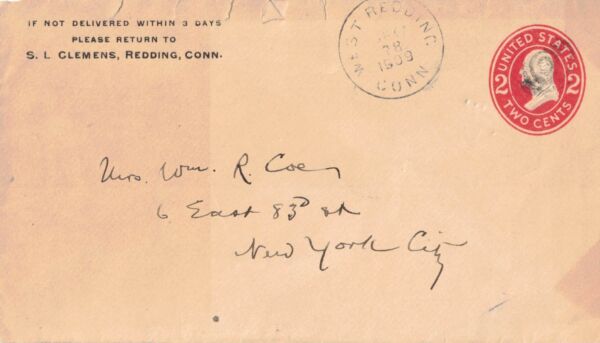
Envelope from Samuel Clemens (Mark Twain) addressed to 83rd Street, 1909. Planting Fields Foundation Archives.
While architects Walker & Gillette were busy at Planting Fields, they were also tapped to design a “bird garden” for the empty lot, which W.R. also owned, next to the townhouse on 83rd Street. Even on these narrow New York City plots, W.R. sought to surround his home with natural beauty. The proposed design would have included a bird bath, bird house, tulips, a boxwood hedge, and of course, rhododendrons.
After Mai’s death W.R. sold the townhouse in 1927 and by the 1950s it was likely demolished to make way for a large apartment building. With his new wife Caroline, W.R. rented an apartment at 927 5th Avenue and 74th Street for the next ten years.
927 5th Avenue
This limestone cooperative building was designed by Warren & Wetmore in 1917 and had twelve units, one on each floor. Another dwelling called for more interior decoration, and once again, there are no images of the apartment. The Coes used Thedlow Decorators, who also worked on Planting Fields. One interesting bit of correspondence shows that Caroline purchased cushions, a directoire stand and table, books, ivy pots, and a set of black candles from Rose Cumming. Rose was an eclectic designer, who embraced a myriad of styles and reportedly disliked electric lights, even in her own town house she used black candles in the living room[i]!
[i] Tapert, Annette. “Rose Cumming: Eccentric Glamour Marks an Original Talent of Lasting Influence.” Architectural Digest, December 31, 1999.
!
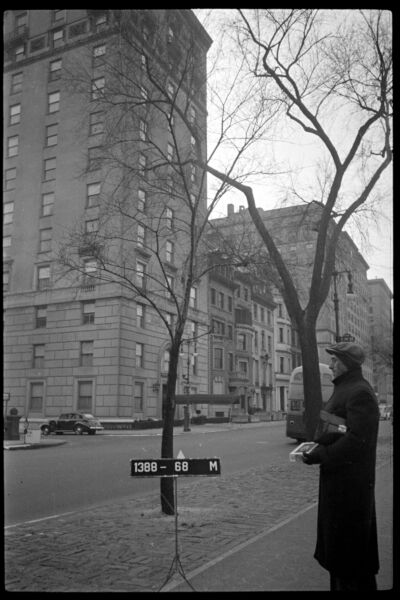
927 5th Avenue, 12 story building on corner, c. 1940, courtesy of NYC Municipal Archives.
River House: 447 East 52nd Street
The Coe’s headed further east and moved to the River House circa 1938. According to the financial ledgers, their monthly rent was $416 ($9,515 in 2025). The 26-story limestone and brick River House was designed by Bottomly, Wagner and White in 1930, right after the 1929 crash of the stock market. It was a luxurious building with ample amenities including its own yacht mooring on the East River—before the creation of FDR Drive [ii].
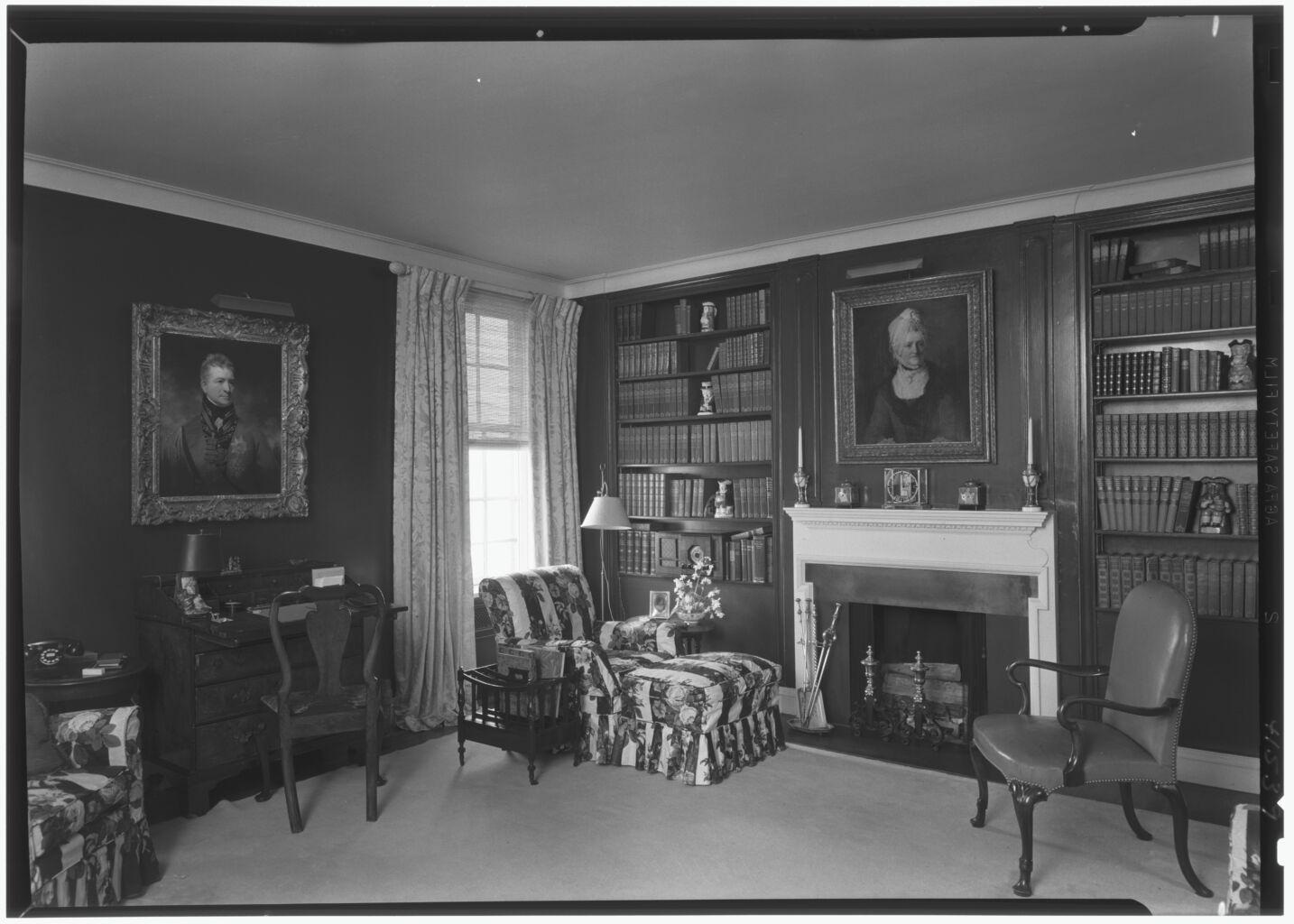
Once again, Thedlow Decorators (now Thedlow, Inc.) were called upon to decorate their new residence, and finally, there are photographs of the interiors available through Library of Congress. The Coes lived here, along with their homes in Oyster Bay, Wyoming, and South Carolina until W.R.’s passing in 1955.
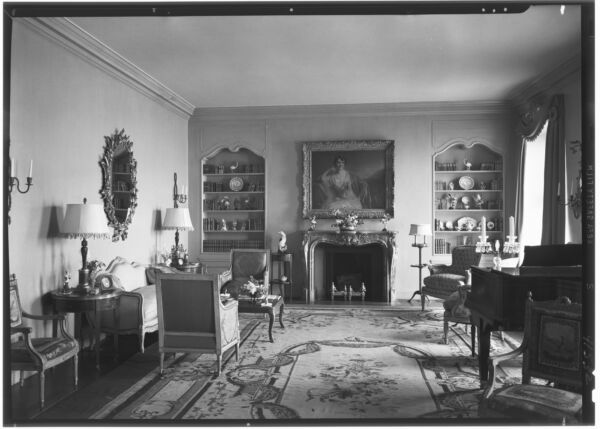
Caroline’s portrait by Frank Salisbury (on view in the Great Hall at Planting Fields) makes an appearance in the living room at the River House—along with a few chairs from the Reception Room. Image courtesy of Library of Congress, Prints & Photographs Division, Gottscho-Schleisner Collection.
“Any attempt to describe it would seem like a chapter out of Grimm’s Fairy Tales. Nothing within the realms of luxury can be imagined that’s not covered.”—The Upholsterer and the Interior Decorator, May 15, 1931, referring to the River House.
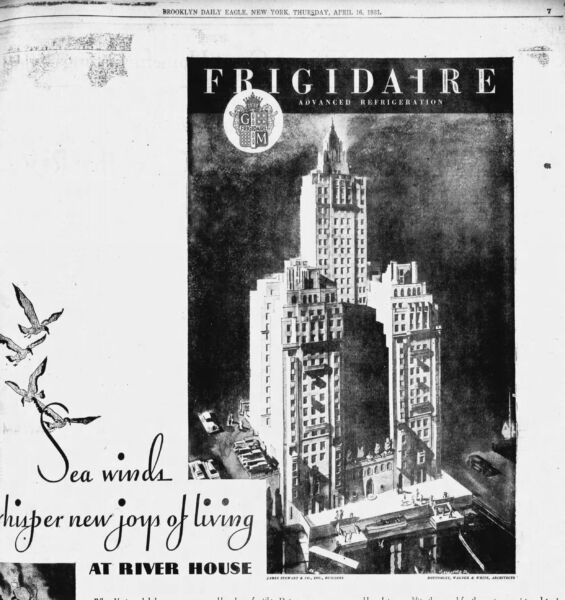
Ad for River House, Brooklyn Daily Eagle, 1931, courtesy of newspapers.com.
– From Micheal D. Coe Archivist, Marie Penny
Header Image: Sitting Room at the River House, 1941. Library of Congress, Prints & Photographs Division, Gottscho-Schleisner Collection. Note the portrait of Lieutenant-General Sir Thomas Picton by Sir William Beechey was gifted to the National Gallery of Art by the Coe Foundation in 1961.
[1] Tapert, Annette. “Rose Cumming: Eccentric Glamour Marks an Original Talent of Lasting Influence.” Architectural Digest, December 31, 1999.
[1] Alpern, Andrew. Apartments for the Affluent. McGraw-Hill, 1975.
What an interesting account of the Coe’s New York residences & the glimpse of the lifestyle of the wealthy back then. That den must have been quite a sight!